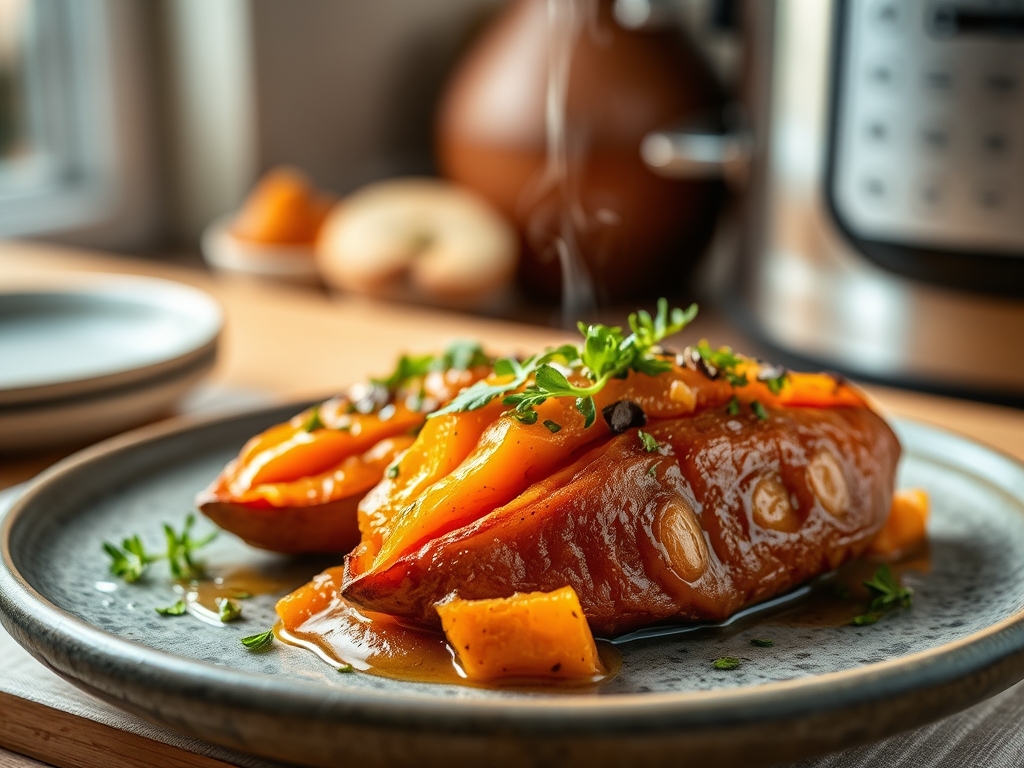
Imagine the hiss of escaping steam and the scent of caramelizing sugars filling your kitchen as you master the ultimate shortcut to autumn comfort. Mastering pressure cooker sweet potato recipes is not just about speed; it is about using high-pressure physics to transform a dense tuber into a velvety masterpiece in under twenty minutes. Whether you are craving a silky puree or a charred, savory wedge, the Instant Pot is your secret weapon for culinary precision.
Most people treat their pressure cooker like a blunt instrument, but we are going to treat it like a laboratory. By manipulating the atmospheric pressure inside the vessel, we raise the boiling point of water, allowing heat to penetrate the starch granules of the sweet potato much faster than a standard oven. This process encourages the breakdown of complex carbohydrates into maltose, resulting in a deeper, more honeyed flavor profile without the two-hour wait. We are aiming for that perfect balance of a structural exterior and a custard-like interior that practically melts when it hits your tongue.
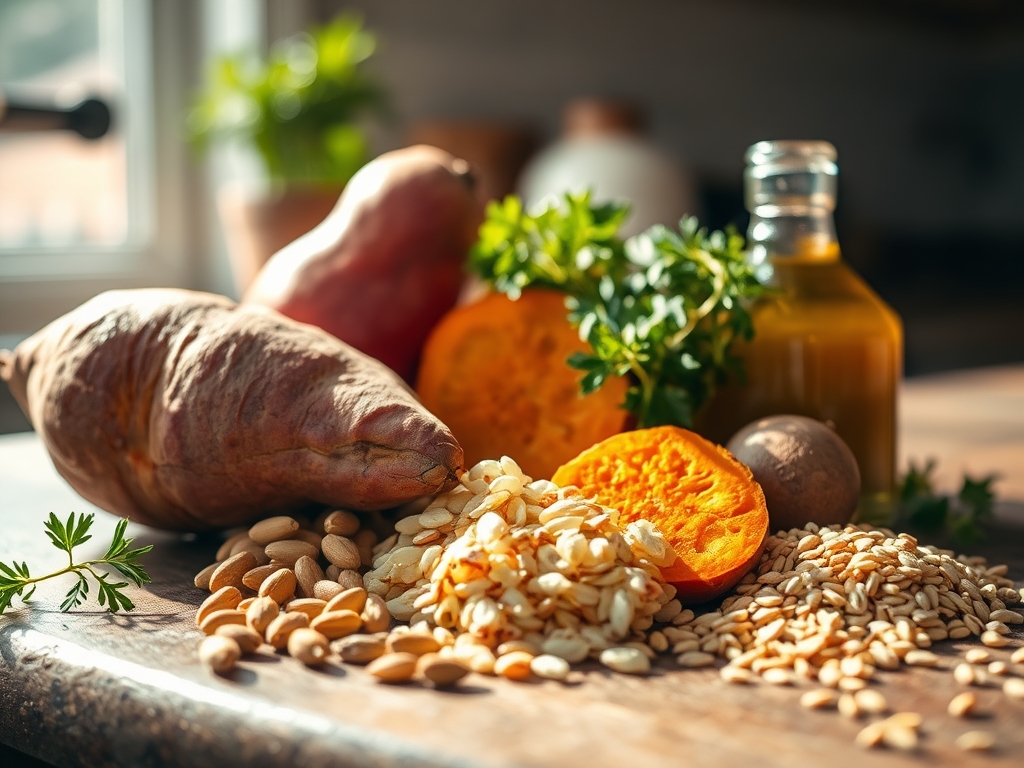
The Gathers:
Before we engage the locking lid, we must assemble our mise-en-place with the precision of a chemist. You will need three to five medium-sized Garnet or Jewel sweet potatoes; these varieties contain the highest moisture content and sugar density for optimal results. Ensure you have a digital scale to weigh your tubers; uniformity is the enemy of uneven cooking. You will also need one cup of filtered water to create the necessary steam environment and a stainless steel trivet to keep the potatoes from sitting in a pool of viscous starch.
Smart Substitutions are the hallmark of a clever cook. If you want to infuse your potatoes with a deeper aroma, swap the water for a piquant apple cider or a light vegetable stock. For those looking to pivot the flavor profile, a splash of coconut milk in the bottom of the pot creates a fragrant steam that permeates the skin. If you find yourself without sweet potatoes, Japanese Yams are a brilliant alternative; they offer a starchier, chestnut-like flavor that holds its shape beautifully under high pressure. Always keep a microplane nearby to zest fresh ginger or nutmeg over the finished product to cut through the natural sweetness.
The Clock:
The "Chef's Flow" is all about timing your peripheral tasks so that everything hits the plate at the exact moment of peak texture. Prep time is a negligible five minutes; simply scrub the skins with a stiff brush to remove debris. The active pressurized cook time ranges from 12 to 18 minutes depending on the girth of your potatoes. However, the most critical phase is the 10-minute natural pressure release.
During this time, the internal temperature stabilizes, preventing the skins from bursting due to a sudden drop in pressure. While the pot does its work, use your heavy-bottomed skillet to render some pancetta or toast pumpkin seeds for a textural contrast. By the time the pin drops, your garnishes should be ready, your bench scraper should be clean, and your appetite should be primed.
Masterclass: 9 Hacks for Perfection
1. The Uniformity Sort
Before cooking, group your potatoes by diameter using your digital scale. If you mix a massive tuber with a slender one, the small one will turn to mush while the large one remains fibrous.
Pro Tip: This prevents uneven thermal carryover, where the exterior of a large potato continues to cook and degrade while the core reaches the target temperature.
2. The Steam Shield
Always use a trivet to elevate the potatoes above the liquid line. This ensures the potatoes cook via convection steam rather than boiling in water.
Pro Tip: Boiling leads to "waterlogging," which dilutes the sugar concentration and prevents the Maillard reaction if you choose to sear them later.
3. The Skin Prick Myth
Unlike oven roasting, you do not need to prick the skins in a pressure cooker. The high-pressure environment prevents the internal steam buildup that causes explosions in a dry oven.
Pro Tip: Keeping the skin intact helps infuse the flesh with its own natural oils, preserving a more intense earthy flavor.
4. The Rapid Infusion
Add a cinnamon stick or a star anise to the steaming water. The high pressure forces the aromatic compounds of the spices into the pores of the sweet potato.
Pro Tip: This is a form of "pressure infusion" that flavors the vegetable from the inside out, rather than just seasoning the surface.
5. The Natural Release Rule
Always allow at least 10 minutes of natural pressure release (NPR). A quick release causes the liquid inside the potato to boil violently, damaging the cellular structure.
Pro Tip: NPR allows the starches to gelatinize fully, resulting in a viscous, creamy texture rather than a grainy one.
6. The Ice Bath Shock
If you are making sweet potato salad, drop the hot potatoes into an ice bath immediately after the NPR. Use tongs to handle them gently.
Pro Tip: This stops the cooking process instantly, preventing the enzymatic browning that can turn the vibrant orange flesh into a dull tan.
7. The Saucier Reduction
Don't throw away the cooking liquid. Pour it into a saucier and reduce it by half with a knob of butter and a splash of bourbon.
Pro Tip: The liquid is full of escaped sugars and minerals; reducing it creates a glaze that is chemically predisposed to pair perfectly with the dish.
8. The Microplane Finish
Once sliced open, use a microplane to grate cold salted butter or cured egg yolk over the steaming flesh.
Pro Tip: The high surface area of the grated butter allows it to aerate and melt instantly, creating a light, foamy mouthfeel rather than a greasy one.
9. The Cast Iron Sear
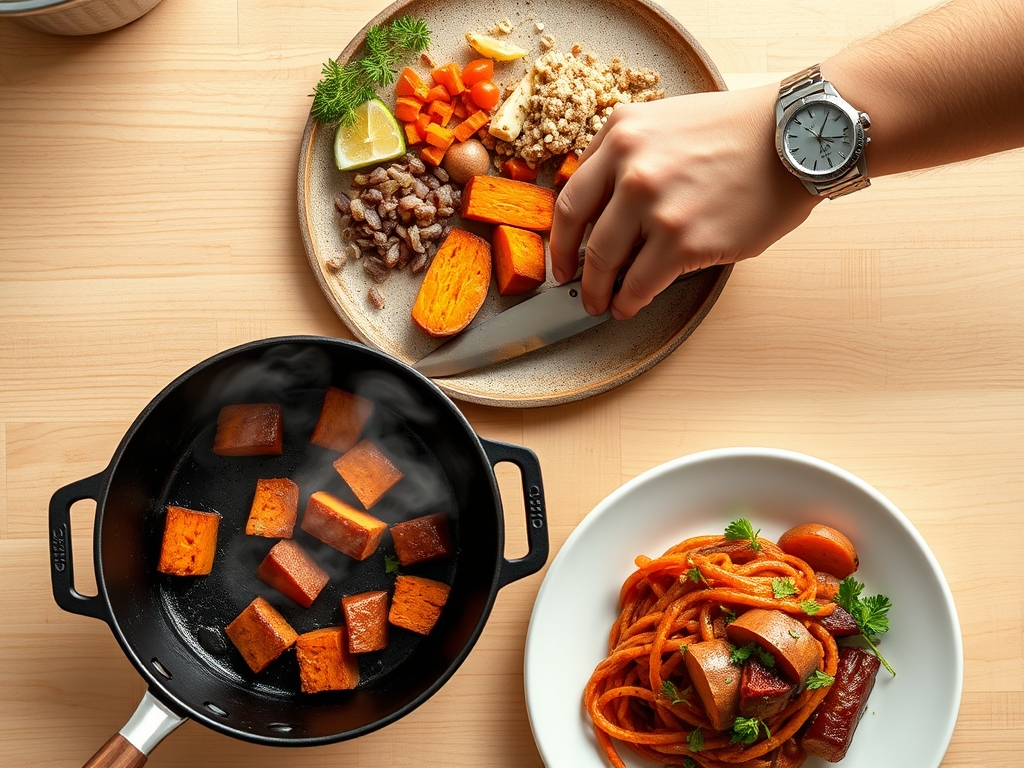
For a smoky finish, take your pressure-cooked wedges and toss them in a heavy-bottomed skillet for 60 seconds.
Pro Tip: Since the interior is already cooked, the quick sear focuses entirely on the Maillard reaction, giving you a crispy skin without drying out the center.
The Deep Dive:
From a macro perspective, sweet potatoes are a powerhouse of complex carbohydrates and Vitamin A. One medium potato provides over 400 percent of your daily vitamin A requirement. For dietary swaps, vegans can substitute butter with a high-quality tahini or avocado oil to maintain that creamy fat profile. If you are following a Keto-adjacent lifestyle, keep portions small and pair them with high-fiber greens to blunt the glycemic response.
The Fix-It: If your potatoes come out "stringy," it usually means they were old or grown in poor soil; a quick pass through a food mill or a fine-mesh sieve will remove those fibers. If they are "mushy," you likely used a quick-release method or too much water; next time, reduce the cook time by two minutes. If the skin is "tough," you may have skipped the scrubbing process; a light coating of olive oil before cooking can soften the exterior.
For meal prep, reheating is a science. Avoid the microwave, which can make the starch "rubbery." Instead, slice the cold potato and reheat it in a heavy-bottomed skillet with a lid. This recreates a mini-steaming environment that restores the "day-one" moisture levels while crisping the edges.
The Wrap-Up:
You are now officially the master of the pressure cooker sweet potato recipes domain. By understanding the interplay between pressure, steam, and starch gelatinization, you have turned a humble root vegetable into a culinary flex. Remember that the best cooking is a blend of rigorous science and soulful intuition. Go forth, grab your tongs, and turn that pressure valve to "Sealing." Your most delicious, velvety, and efficient dinner yet is only a few minutes away.
The Kitchen Table:
How long do sweet potatoes take in the pressure cooker?
Medium sweet potatoes typically require 12 to 15 minutes at high pressure, followed by a 10-minute natural release. Larger tubers may need up to 18 minutes to ensure the core reaches a fully gelatinized, creamy consistency.
Why are my pressure cooker sweet potatoes watery?
This happens when potatoes sit directly in the cooking liquid. Always use a trivet to elevate them. Additionally, using a "Quick Release" can draw excess moisture into the flesh; stick to a "Natural Release" for better texture.
Do I need to peel sweet potatoes before pressure cooking?
Peeling is unnecessary and often counterproductive. The skin protects the flesh from becoming waterlogged and contains significant fiber. After cooking, the skin will slip off effortlessly if you prefer a smooth puree or mash.
Can I cook frozen sweet potatoes in a pressure cooker?
Yes, you can cook whole frozen sweet potatoes by increasing the high-pressure time to 25 minutes. However, for the best texture and sugar development, fresh potatoes are always recommended to avoid a mealy, inconsistent interior.