Imagine the crisp, structural snap of a cold celery stalk meeting the velvet, earthy comfort of a Yukon Gold potato. It is the culinary equivalent of a perfectly tailored blazer over a soft cashmere sweater. While most people relegate celery to a lonely mirepoix or a sad snack tray, these celery and potato recipes elevate the humble stalk into a star that provides essential aromatic depth and structural integrity to your side dishes.
We are moving beyond the basic mash. We are talking about emulsified purees, crispy roasted medleys, and bright, acidic salads that cut through the richness of a Sunday roast. Celery brings more than just crunch; it contains natural nitrates and a high water content that, when heated, releases a savory perfume that mimics MSG without the additives. By the time we finish, you will see these two ingredients as the ultimate power couple of the vegetable drawer.
The magic lies in the contrast of textures. Potatoes provide the starch and the "mouthfeel" that triggers our satiety centers, while celery provides the fibrous "bite" and a piquant flavor profile that refreshes the palate. Whether you are looking for a low-calorie alternative to heavy gratins or a sophisticated puree for a dinner party, these nine variations on celery and potato recipes will become your new kitchen staples.
The Gathers:
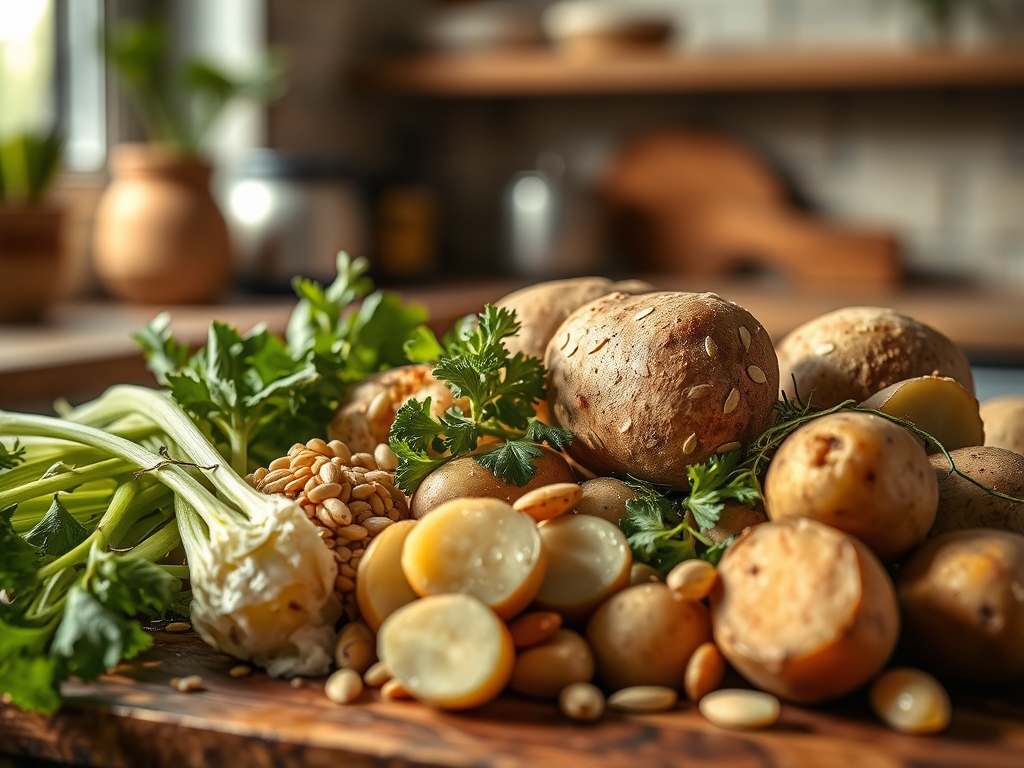
To master these celery and potato recipes, your mise-en-place must be precise. We are looking for waxy potatoes (like Red Bliss or Fingerlings) for salads and roasting, and starchy potatoes (like Russets) for purees. Your celery should be "heart-heavy," meaning you want those pale, tender inner stalks that carry the most concentrated flavor without the stringy toughness of the outer ribs.
Gather your heavy-bottomed skillet, a sharp chef's knife, and a digital scale for accuracy. You will also need high-quality fats. Use grass-fed butter for its higher smoke point and richer beta-carotene content, or a cold-pressed avocado oil for high-heat roasting. Do not discard the celery leaves; they are packed with apigenin, a powerful antioxidant, and serve as a sophisticated garnish that mimics flat-leaf parsley but with a more aggressive, herbal punch.
Smart Substitutions:
If you are watching your glycemic index, swap half the potatoes for celeriac (celery root). It provides a similar density with fewer carbohydrates. For a vegan twist, replace heavy cream with a viscous cashew cream or a high-quality coconut milk to maintain that essential fatty acid mouthfeel. If you lack fresh garlic, a dash of garlic oil can infuse the dish without the risk of burning pungent solids in a hot pan.
The Clock
Efficiency in the kitchen is about managing the Chef's Flow. This is the art of overlapping tasks so no heat is wasted. For most of these celery and potato recipes, your active prep time is roughly 15 minutes. This involves the washing, peeling, and dicing phase. Use a bench scraper to move your aromatics quickly from the cutting board to the pot; it prevents dulling your knife edge and keeps your station clean.
The cooking phase typically spans 20 to 30 minutes. Starch gelatinization in potatoes occurs at approximately 150 degrees Fahrenheit, while celery softens as its cellulose walls break down under sustained heat. If you are roasting, allow 40 minutes for the Maillard reaction to develop those deep, nutty browns. Always factor in a five-minute "rest" for purees; this allows the starches to settle and prevents a watery "weep" on the plate.
The Masterclass
1. The Precision Dice
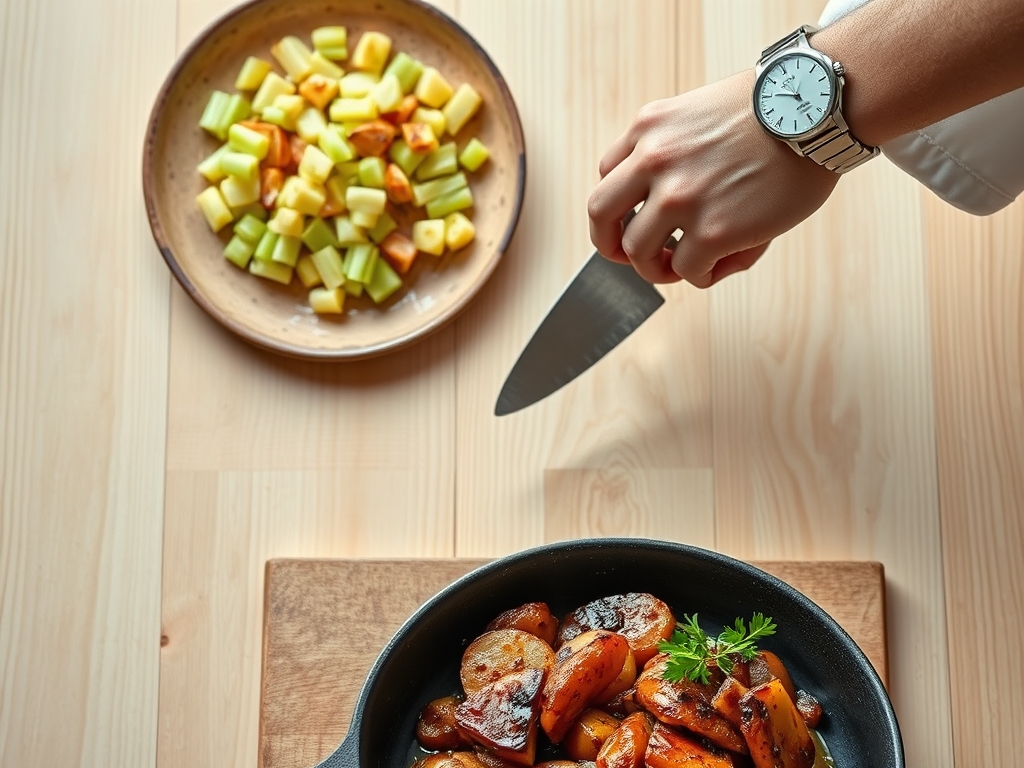
Start by cubing your potatoes and celery into uniform half-inch pieces. Consistency is not just for aesthetics; it ensures that every morsel reaches the same level of thermal equilibrium at the same time. Use a sharp vegetable peeler to remove the toughest outer fibers of the celery if the stalks are particularly large.
Pro Tip: This prevents enzymatic browning. By keeping your cut potatoes in a bowl of cold water with a splash of lemon juice, you inhibit the polyphenol oxidase enzyme from reacting with oxygen, keeping your starches snowy white.
2. The Cold Water Start
Always place your potatoes in a pot of cold, salted water before turning on the heat. Bringing the water and the vegetables up to temperature together ensures the outside of the potato does not turn to mush before the center is cooked through. Add the celery stalks during the last 10 minutes of boiling to retain their vibrant green color.
Pro Tip: This technique manages starch retrogradation. Starting cold allows the heat to penetrate the cell walls evenly, resulting in a fluffier texture rather than a gummy, glue-like consistency.
3. The Sauté and Infuse
In a heavy-bottomed skillet, render a small amount of fat and sauté your celery until it becomes translucent. This is the "sweating" phase. Use a microplane to grate in fresh garlic or ginger at the very end to avoid scorching the delicate aromatics.
Pro Tip: This is the aromatic infusion stage. Fat is a flavor carrier. By sautéing the celery first, you are dissolving the fat-soluble flavor compounds (phthalides) into the oil, which then coats the potatoes for a more intense flavor profile.
4. The Deglaze
Once your vegetables have developed a slight golden crust, use a splash of white wine or vegetable stock to deglaze the pan. Use a wooden spoon to scrape up the brown bits (the fond) from the bottom of the skillet.
Pro Tip: This utilizes the Maillard reaction. Those brown bits are concentrated umami. Introducing a liquid creates steam that lifts these flavors back into the vegetables, deepening the complexity of the dish.
5. The Emulsification
If you are making a puree, use a food mill or a potato ricer rather than a blender. Fold in your warm cream and butter slowly. The goal is to create a stable emulsion where the fat is suspended perfectly within the starch matrix.
Pro Tip: Avoid overworking the starch. High-speed blending shears the potato starch molecules, releasing too much amylopectin and turning your elegant side dish into an adhesive paste.
The Deep Dive
When we look at the macro nutrition of celery and potato recipes, we see a beautiful balance. Potatoes provide the complex carbohydrates and potassium necessary for muscle function, while celery adds fiber and hydration with almost zero caloric impact. A standard serving of these blended sides typically ranges from 120 to 180 calories, depending on your choice of fats.
Dietary Swaps:
For a Keto-friendly version, lean heavily on the celery and celery root, using only a small amount of red potato for texture. For Vegan enthusiasts, use a high-quality olive oil and a splash of nutritional yeast to mimic the savory depth of parmesan cheese. All these recipes are naturally Gluten-Free, provided you avoid using flour-based thickeners.
The Fix-It:
- The Puree is Soup: If you over-boiled or added too much liquid, do not panic. Stir in a tablespoon of dehydrated potato flakes or simmer the mixture uncovered over low heat to evaporate excess moisture.
- The Celery is Stringy: This usually happens with older stalks. Use a fine-mesh sieve to pass your puree through; this will catch the tough cellulose fibers and leave you with a silk-like texture.
- The Dish is Bland: Potatoes absorb a massive amount of salt. If it tastes flat, add a "brightener" like white balsamic vinegar or a squeeze of lemon. The acid resets the palate and makes the salt pop.
Meal Prep Science:
When reheating, do not use the microwave on high power. This dehydrates the potato starch and makes it rubbery. Instead, reheat in a saucier over low heat with a tablespoon of water or milk. This re-hydrates the starches and restores the creamy emulsion for a "day-one" quality experience.
The Wrap-Up
Mastering celery and potato recipes is about embracing the science of the simple. You are taking two of the most affordable, humble ingredients in the pantry and using professional techniques like deglazing and emulsification to create something spectacular. These nine blends prove that healthy eating does not have to be boring or restrictive. It is about the crunch, the cream, and the clever use of aromatics. So, grab your favorite heavy-bottomed skillet and start experimenting; your Sunday dinner is about to get a serious upgrade.
The Kitchen Table
Can I freeze potato and celery mash?
Yes, but the texture may change slightly upon thawing. To fix this, reheat the mixture in a pan and whisk vigorously to re-incorporate the fats and starches, ensuring a smooth, creamy consistency once again.
What is the best potato for roasting with celery?
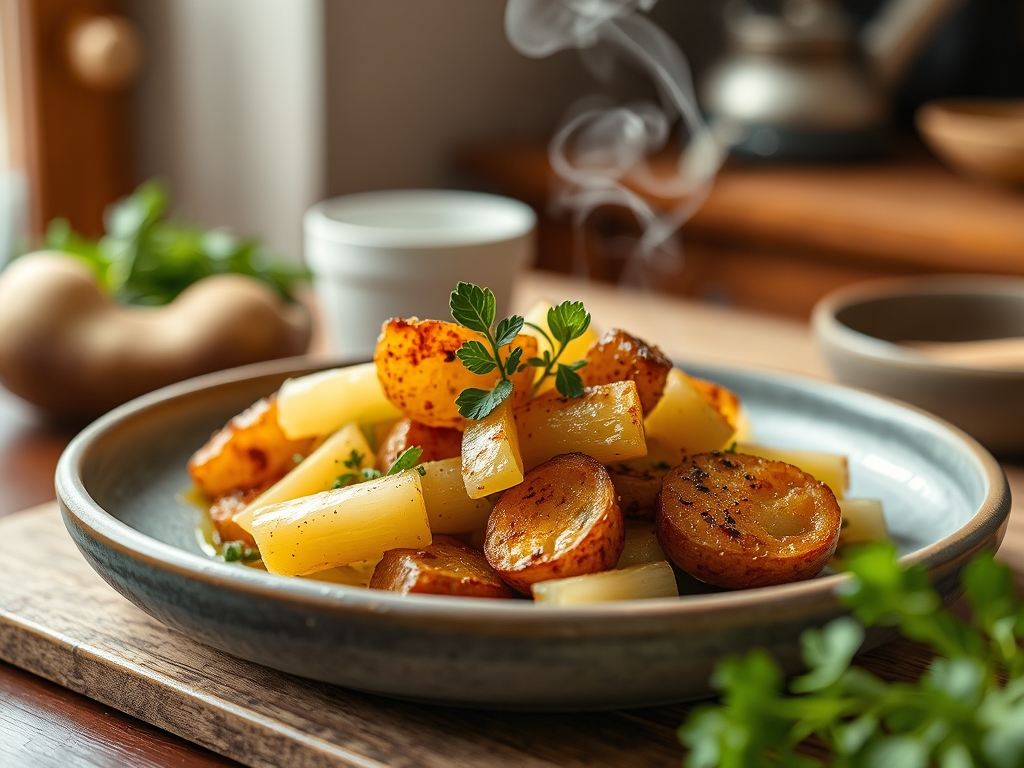
Yukon Gold potatoes are the gold standard. They have a medium starch content that allows for a creamy interior while still developing a crisp, golden-brown exterior when roasted alongside the aromatic celery stalks.
How do I keep celery from getting mushy?
Add your celery during the final stages of cooking. For roasting, cut celery into larger chunks. For boiling, add it only in the last ten minutes to ensure it retains its structural integrity and vibrant flavor.
Is celery root the same as celery stalks?
No, they are different varieties of the same plant family. Celery root (celeriac) is grown for its large, starchy bulb, while conventional celery is grown for its stalks. Both work beautifully in these recipes for added depth.
How do I store leftover celery and potato sides?
Store in an airtight container in the refrigerator for up to four days. To maintain the best texture, reheat on the stovetop with a splash of liquid to prevent the starches from drying out and becoming grainy.