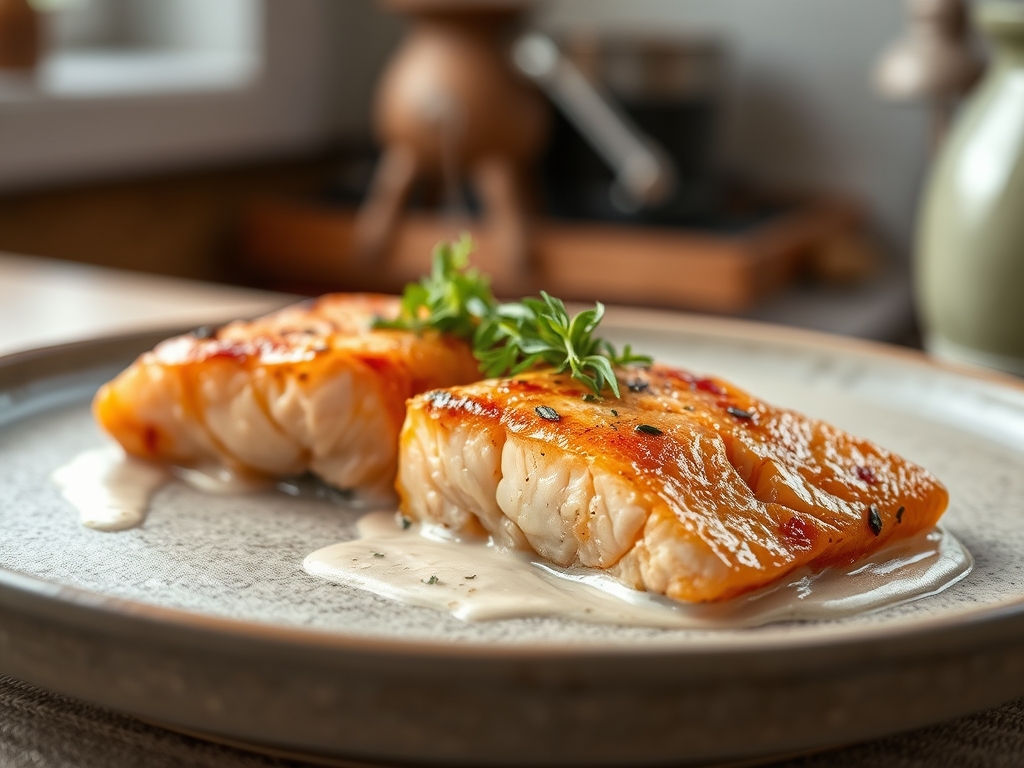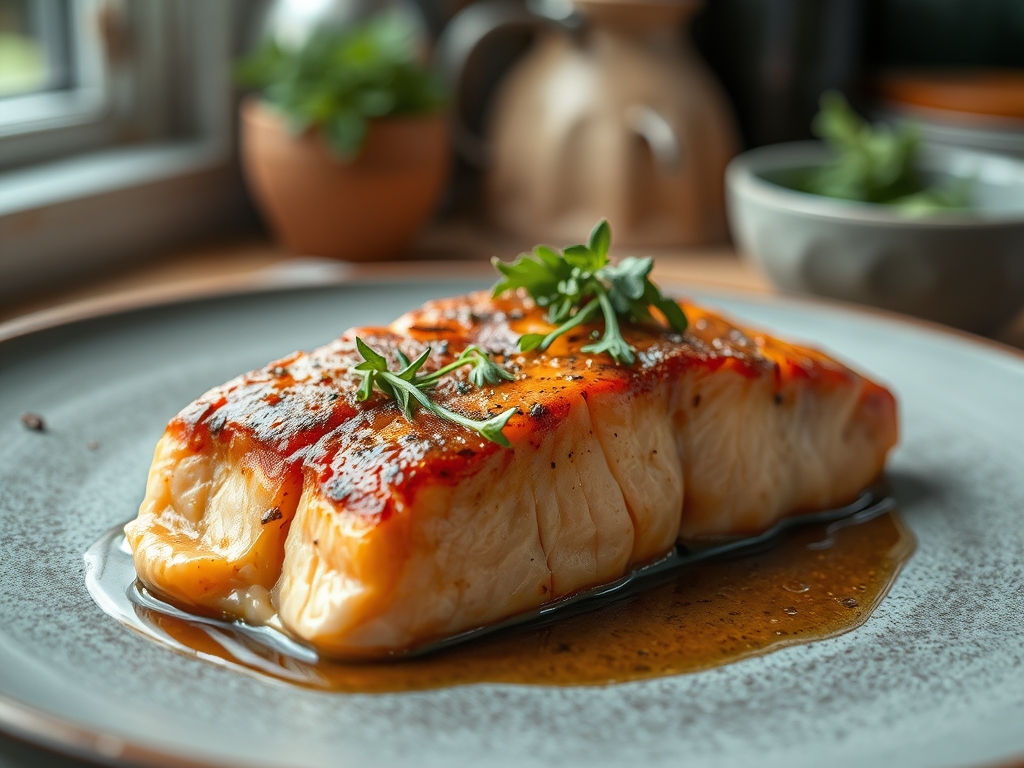
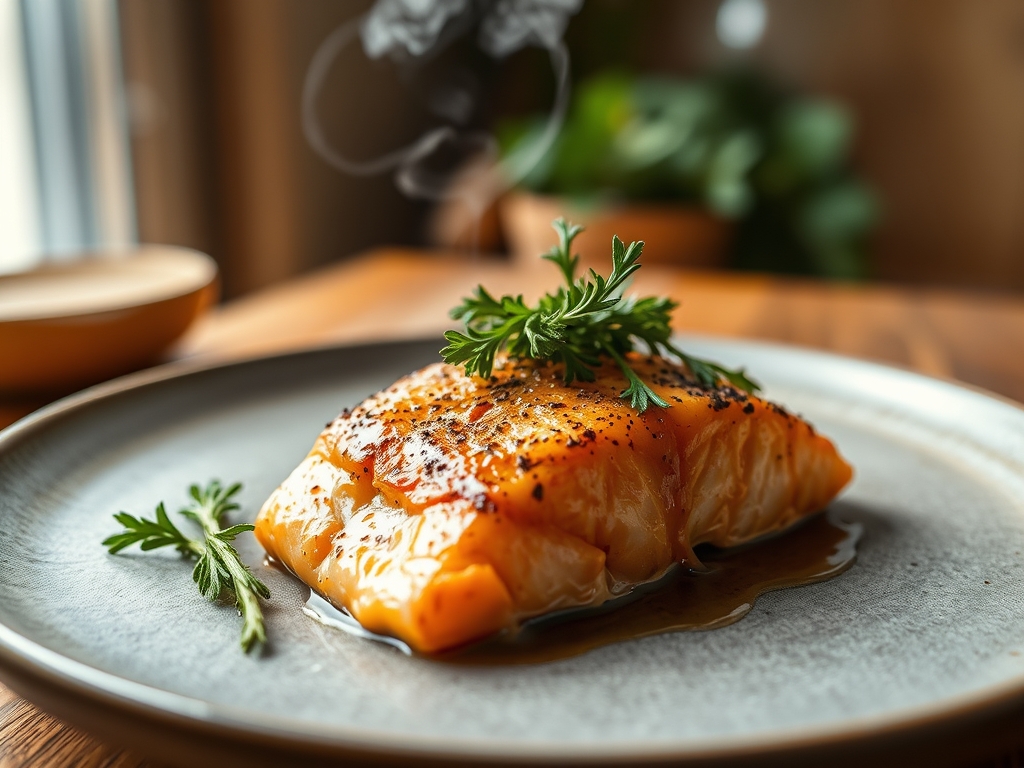
Picture the sound of a heavy bottomed stainless steel skillet meeting a high smoke point oil; it is a sharp, rhythmic sizzle that signals the start of a culinary transformation. When you are hunting for the ultimate clean salmon recipes, you are not just looking for a meal; you are seeking that perfect intersection of omega-3 fatty acids and a golden, shattered-glass crust. Salmon is the undisputed queen of the cold water fish world, offering a buttery texture that demands respect and a scientific touch. Most home cooks treat salmon like a delicate flower, but I am going to teach you to treat it like a structural masterpiece. We are moving beyond the bland, steamed fillets of the past. Instead, we are focusing on cellular integrity and flavor extraction. By understanding how heat interacts with the muscle fibers and the subcutaneous fat layer, you can transform a simple piece of protein into a restaurant quality dish. Clean eating does not mean sacrificing the Maillard reaction; it means optimizing every molecule of your ingredients to ensure a nutrient dense, piquant result that leaves you feeling energized rather than weighed down.
The Gathers:
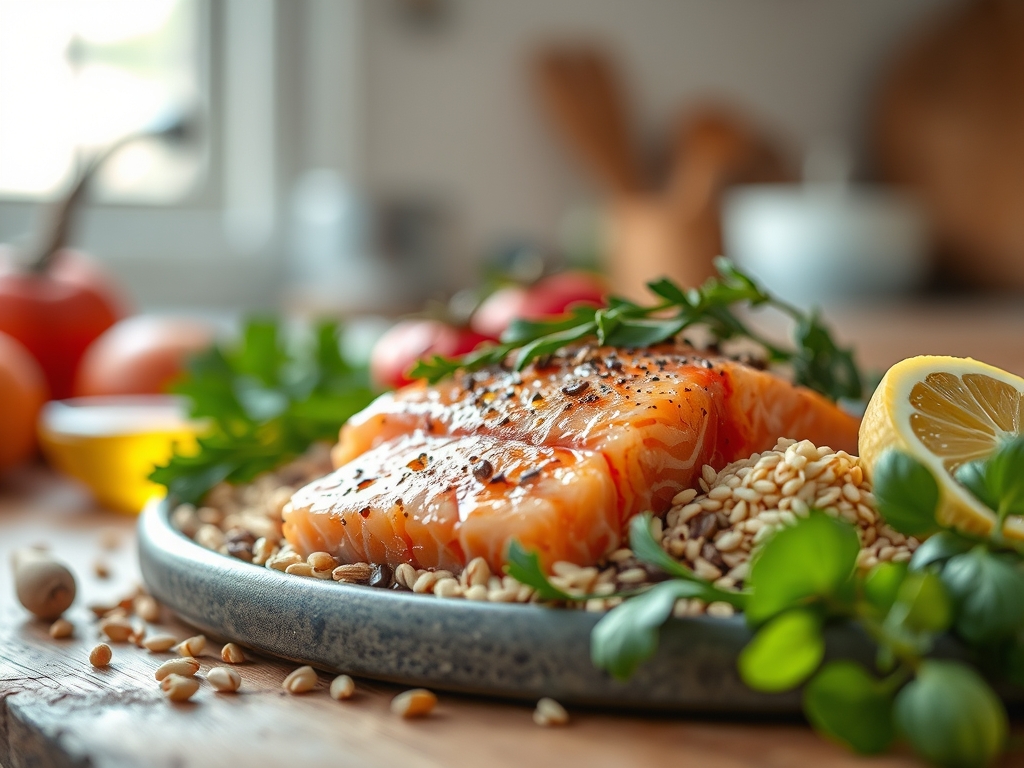
To execute these clean salmon recipes with precision, your mise-en-place must be impeccable. Start with wild caught King or Sockeye salmon, which contains higher levels of astaxanthin, the antioxidant responsible for that vibrant coral hue. You will need a high quality sea salt with a consistent grain size to ensure even osmotic pressure during the seasoning phase. For your aromatics, gather fresh Meyer lemons, garlic cloves that feel heavy for their size, and a bundle of woody herbs like thyme or rosemary.
The "Smart Substitutions" are where we lean into functional medicine. Instead of using butter to baste, utilize avocado oil for its 520 degree Fahrenheit smoke point or ghee for a lactose-free, nutty depth. If you are avoiding nightshades, swap paprika for a pinch of turmeric and ground coriander to achieve a golden glow without the lectin load. Always use a microplane to zest your citrus; this ensures you capture the volatile oils in the flavedo without hitting the bitter white pith. Keep a digital scale nearby to ensure your fillets are uniform in weight, which guarantees they will finish cooking at the exact same moment.
The Clock:
The "Chef's Flow" is all about managing thermal momentum. Your total active prep time is exactly twelve minutes, while the cooking phase spans a tight eight to ten minutes depending on the thickness of the cut.
0-5 Minutes: Tempering. Remove the fish from the refrigerator. Cold protein hitting a hot pan causes the muscle fibers to contract violently, squeezing out moisture and resulting in a tough texture.
5-12 Minutes: The Prep. While the fish tempers, use your bench scraper to organize your minced aromatics and pat the skin bone-dry with lint-free paper towels.
12-20 Minutes: The Sear. This is the high-intensity phase where you focus entirely on the pan.
20-25 Minutes: The Rest. Carryover cooking is a scientific fact; the internal temperature will rise by five degrees after you remove it from the heat. Ignoring this leads to the dreaded "white stuff" (albumin) leaking out of the fibers.
The Masterclass:
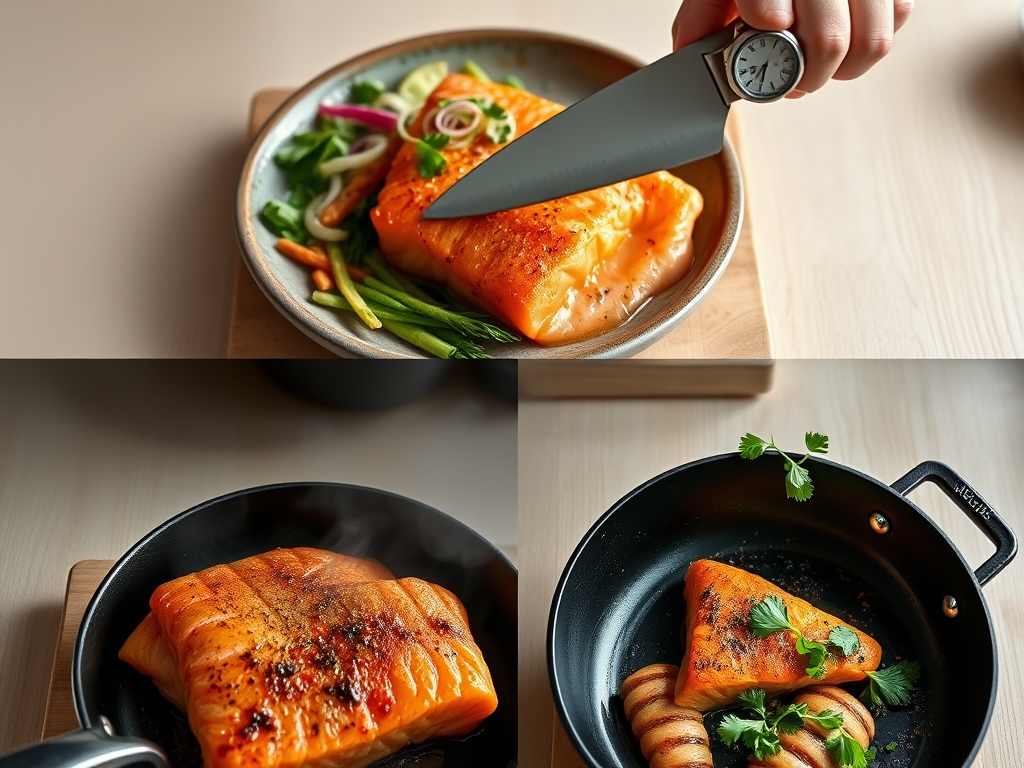
1. The Desiccation Ritual
Use the back of a chef's knife to scrape any residual moisture from the skin of the salmon. Moisture is the enemy of the Maillard reaction; it creates steam, which prevents the surface from exceeding 212 degrees Fahrenheit.
Pro Tip: Desiccation allows for rapid dehydration of the surface cells, ensuring the skin becomes a crispy, protective heat shield for the delicate flesh underneath.
2. The Osmotic Seasoning
Season the skin side only with salt at the very last second. If you salt the skin too early, it draws out moisture via osmosis, making the skin rubbery. Season the flesh side earlier to allow the salt to penetrate the protein strands.
Pro Tip: Salt acts as a denaturant, unwinding the tightly coiled proteins so they can hold onto more moisture during the heat application.
3. The Cold Pan Start (Optional Technique)
For exceptionally thick fillets, placing the fish skin-side down in a cold, heavy-bottomed skillet and then turning on the heat allows the fat to render slowly. This prevents the skin from shrinking too quickly and curling.
Pro Tip: Slow rendering of the subcutaneous fat creates a self-basting environment that keeps the fish viscous and tender.
4. The Weight Application
Once the fish is in the pan, use a flexible fish spatula or a small weighted press to keep the skin in total contact with the metal. This prevents the natural tendency of the fish to arch as the collagen in the skin contracts.
Pro Tip: Constant surface contact ensures even heat distribution, preventing "cold spots" that result in unevenly cooked protein.
5. The Aromatics Infusion
When the salmon is 70 percent cooked (look for the color change moving up the side of the fillet), add your crushed garlic and herbs to the pan. Tilting the pan allows the oil to pool, where it will infuse with the essential oils of the herbs.
Pro Tip: Fat is a flavor carrier; by infusing the oil at the end, you avoid burning the delicate aromatics while maximizing their piquant reach.
6. The Deglaze and Emulsify
Remove the fish and deglaze the pan with a splash of bone broth or white wine vinegar. Use a saucier whisk to incorporate the browned bits (fond) into a light, clean sauce.
Pro Tip: This creates a pan sauce without the need for heavy creams, utilizing the gelatin released during cooking to create a silky mouthfeel.
7. The Controlled Rest
Place the salmon on a wire rack rather than a flat plate. This allows air to circulate around the skin, keeping it crispy while the internal juices redistribute throughout the fillet.
Pro Tip: Resting on a flat surface creates a steam pocket that instantly softens the skin you worked so hard to crisp.
The Deep Dive:
When we look at the macro nutrition of clean salmon recipes, we are seeing a powerhouse profile. A six-ounce fillet provides roughly 34 grams of protein and 22 grams of high-quality fats. It is a zero-carb foundation that supports brain health and reduces systemic inflammation.
For dietary swaps, vegans can apply these searing techniques to thick slabs of "King Oyster" mushrooms, which mimic the meaty texture of fish. For those on a strict Keto protocol, increase the fat content by finishing the dish with a dollop of macadamia nut pesto. If you are Gluten-Free, ensure your deglazing liquid is a certified GF broth or a dry verjus.
"The Fix-It" Guide:
- The Skin is Stuck: Do not force it. Protein bonds to metal initially; once the Maillard reaction is complete, the fish will naturally release from the pan.
- Albumin Leakage: If you see white bubbles, your heat is too high. This is the protein "over-coagulating" and pushing out moisture. Lower the flame immediately.
- Raw Middle: If the exterior is perfect but the interior is cold, use a lid to trap steam for sixty seconds to accelerate internal cooking without burning the crust.
Meal Prep and Reheating: To maintain "day-one" quality, never use a microwave. The electromagnetic waves vibrate water molecules too violently, toughening the fish. Instead, reheat in a 275 degree Fahrenheit oven with a splash of water and a tight foil seal to gently re-steam the protein.
The Wrap-Up:
Mastering clean salmon recipes is a superpower in the kitchen. By focusing on the science of heat and the integrity of your ingredients, you move from being a recipe-follower to a culinary architect. Remember to keep your pans heavy, your skin dry, and your aromatics fresh. You now have the technical blueprint to create a meal that is as sophisticated as it is nourishing. Go forth and sear with confidence; your kitchen is your laboratory, and the results are going to be delicious.
The Kitchen Table:
How do I stop salmon from sticking to the pan?
Ensure the pan is fully preheated and the fish skin is bone-dry. Avoid moving the fillet for the first three minutes; the protein will naturally release from the metal once a sufficient crust has formed through the Maillard reaction.
What is the best temperature for cooked salmon?
For a moist, translucent center, aim for an internal temperature of 125 to 130 degrees Fahrenheit. Remember that carryover cooking will raise the temperature by several degrees while the fish rests on your cutting board or wire rack.
Can I use frozen salmon for clean recipes?
Yes, provided you thaw it slowly in the refrigerator. Pat the fish extremely dry after thawing to remove excess moisture. High-quality flash-frozen salmon often retains more nutrients than "fresh" fish that has sat in a display case for days.
Why is my salmon oozing white stuff?
That white substance is albumin, a harmless protein. It appears when the fish is cooked too quickly or at a temperature that is too high, causing the muscle fibers to contract and squeeze the internal proteins to the surface.