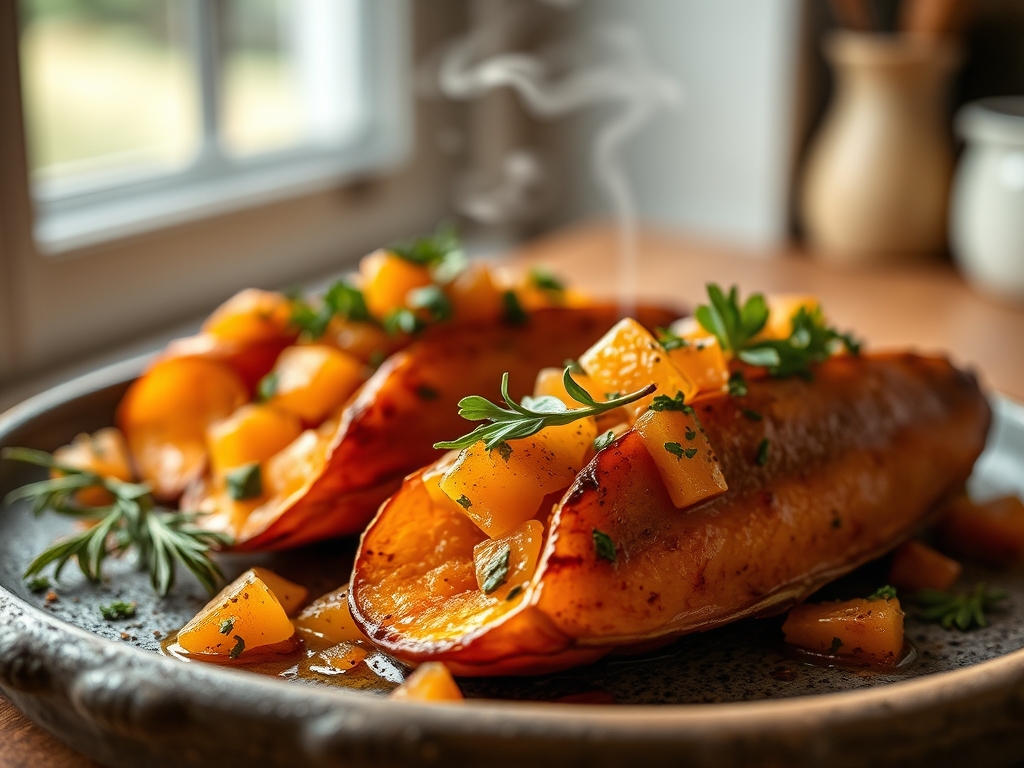
Imagine the scent of smoldering sage and toasted pecans drifting through a kitchen alive with the hum of holiday prep. While everyone else is drowning their tubers in marshmallows and corn syrup, you are about to revolutionize the table with sophisticated, savory sweet potato recipes for thanksgiving that actually respect the vegetable. We are moving beyond the sugar coma into a world of umami, salt, and smoke.
The secret to a truly memorable side dish lies in the tension between the natural sugars of the potato and the sharp, grounding notes of salt and fat. Sweet potatoes are botanical powerhouses, packed with complex carbohydrates that undergo a chemical metamorphosis when exposed to high heat. By leaning into savory profiles, you unlock a depth of flavor that complements the roasted turkey and rich gravy rather than competing with them for sweetness. We are aiming for that perfect, viscous interior and a piquant, herbaceous crust that makes guests pause mid-bite. This is not just a side dish; it is a masterclass in flavor balancing. Whether you are a seasoned host or a first-time holiday cook, mastering these savory sweet potato recipes for thanksgiving will elevate your entire menu from predictable to professional.
The Gathers:
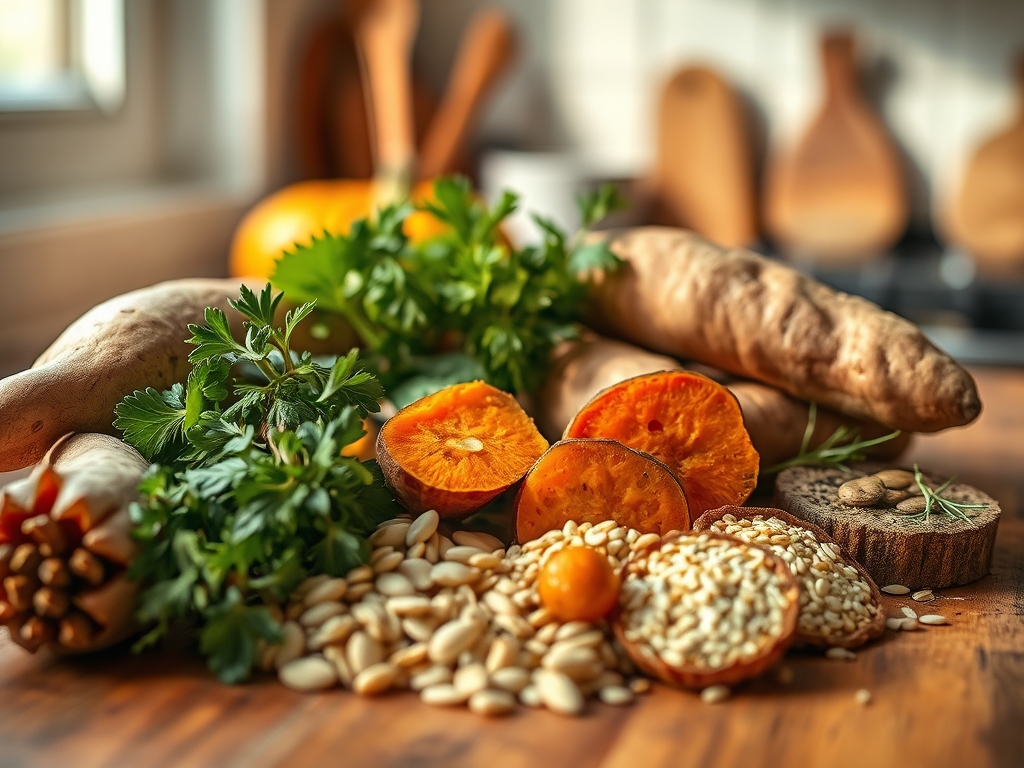
To achieve culinary excellence, your mise-en-place must be precise. Start with four pounds of Beauregard or Jewel sweet potatoes. These varieties possess a high moisture content and a reliable starch-to-sugar ratio. You will also need high-quality fats to carry flavor: unsalted European-style butter (which has a lower water content) and cold-pressed extra virgin olive oil. For the aromatic profile, gather fresh rosemary, thyme, and sage. Do not use dried herbs here; the volatile oils in fresh herbs are essential for the infusion process.
For the savory punch, we utilize aged Parmigiano-Reggiano for its crystalline texture and salty bite. You will also need a head of roasted garlic, smoked paprika for a hint of wood-fire essence, and Maldon sea salt for the final textural finish.
Smart Substitutions:
If you are cooking for a vegan crowd, swap the butter for a high-quality cashew cream or a neutral avocado oil. For those avoiding nightshades, replace the paprika with a touch of ground cumin to maintain that earthy depth. If you cannot find fresh sage, a small amount of fried shallots can provide a similar savory crunch without the medicinal notes of dried sage leaves.
The Clock: Mastering the Chef's Flow
Efficiency in a holiday kitchen is about managing your "thermal real estate." Total active prep time for these savory sweet potato recipes for thanksgiving is approximately 25 minutes, but the total elapsed time is roughly 75 minutes.
The "Chef's Flow" dictates that you start by preheating your oven to 425 degrees Fahrenheit. While the oven reaches temperature, perform your knife work. Use a sharp chef's knife or a mandoline for uniform slices. The roasting phase takes 40 to 50 minutes, depending on the density of your tubers. During the final 10 minutes of roasting, you will prepare your brown butter infusion on the stovetop. This staggered approach ensures that the potatoes are served at their peak temperature, with the aromatics still vibrant and the fats perfectly emulsified.
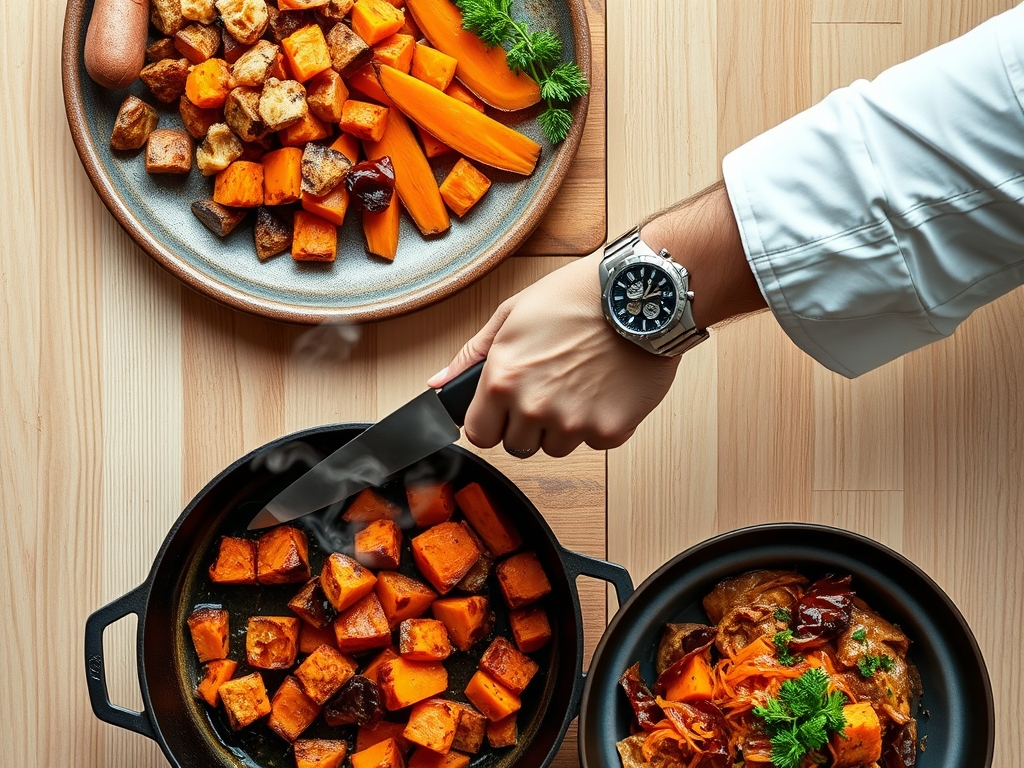
The Masterclass:
1. The Precision Prep
Peel your potatoes and use a bench scraper to clear the debris. Slice the potatoes into uniform 1-inch cubes or 1/8-inch rounds if you are making a gratin. Consistency is key for even heat distribution.
Pro Tip: Uniformity prevents "hot spots" where smaller pieces over-caramelize and turn bitter before the larger pieces reach the desired internal temperature. This is known as managing thermal mass.
2. The Starch Release
Place your cut potatoes in a large bowl of ice water for ten minutes. This removes excess surface starch, which prevents the potatoes from becoming gummy during the roasting process.
Pro Tip: Rinsing surface starch allows for a cleaner Maillard reaction. When the exterior is free of loose starch, the heat can interact directly with the cell walls to create a crisp, golden crust.
3. The Fat Emulsification
Pat the potatoes bone-dry with a lint-free kitchen towel. Toss them in a heavy-bottomed skillet or a large mixing bowl with melted butter and olive oil. Ensure every millimeter of surface area is coated.
Pro Tip: Water is the enemy of browning. By drying the potatoes thoroughly, you ensure the fat can effectively conduct heat to the vegetable rather than wasting energy evaporating surface moisture.
4. The Aromatic Infusion
Add your minced garlic, chopped rosemary, and smoked paprika. Use tongs to distribute the spices evenly so they do not clump in one area.
Pro Tip: This is the infusion stage. The fats act as a solvent, extracting the fat-soluble flavor compounds from the herbs and spices and distributing them throughout the dish.
5. The High-Heat Roast
Spread the potatoes on a parchment-lined baking sheet. Do not crowd the pan. Roast at 425 degrees, flipping once halfway through using a metal spatula.
Pro Tip: Crowding the pan causes the potatoes to steam rather than roast. Giving them space allows for convection airflow, which is essential for developing a crisp exterior through moisture evaporation.
6. The Umami Finish
Once the potatoes are fork-tender and charred at the edges, remove them from the oven. Immediately grate fresh Parmigiano-Reggiano over the top using a microplane.
Pro Tip: Applying cheese while the potatoes are at their peak temperature allows the proteins to slightly melt and bond with the potato skin, creating a savory crust through residual heat.
7. The Acid Balance
Finish the dish with a tiny squeeze of fresh lemon juice or a drizzle of aged balsamic vinegar just before serving.
Pro Tip: Acid acts as a flavor brightener. It cuts through the viscous nature of the sweet potato and the richness of the butter, providing a "lift" that prevents the dish from feeling heavy on the palate.
The Deep Dive:
Macro Nutrition
Sweet potatoes are a nutritional goldmine. One medium potato provides over 400% of your daily Vitamin A requirement. By using savory fats like olive oil, you actually increase the bioavailability of these fat-soluble vitamins. This dish is high in fiber and complex carbohydrates, providing sustained energy throughout the long holiday evening.
Dietary Swaps
- Vegan: Use coconut oil and nutritional yeast for a "cheesy" umami flavor without the dairy.
- Keto: While sweet potatoes are higher in carbs, you can reduce the portion size and increase the healthy fats (heavy cream or extra butter) to fit within a liberal keto framework.
- Gluten-Free: This recipe is naturally gluten-free; just ensure your spices are certified.
The Fix-It: Common Pitfalls
- Soggy Potatoes: Usually caused by overcrowding the pan. Fix it by returning the potatoes to a higher heat (450F) for five minutes on a fresh, dry baking sheet.
- Burnt Garlic: If your garlic turns bitter, it was likely minced too small. Next time, use whole smashed cloves and remove them before serving.
- Too Sweet: If the potatoes feel like dessert, increase the salt and add a pinch of cayenne pepper to provide a heat contrast.
Meal Prep & Reheating
To maintain "day-one" quality, do not microwave. Reheat your savory sweet potato recipes for thanksgiving in a 350-degree oven for 10 minutes. This allows the fats to re-liquefy and the exterior to crisp back up, avoiding the "mush" factor common with leftover tubers.
The Wrap-Up:
You now have the technical prowess to turn a humble root vegetable into the star of the Thanksgiving table. By focusing on the science of the Maillard reaction and the balance of umami and acid, you have moved beyond the basic casserole. These savory sweet potato recipes for thanksgiving are about more than just food; they are about the joy of precision and the warmth of sharing something truly exceptional with the people you love. Now, grab your microplane and get to work!
The Kitchen Table:
How do I prevent sweet potatoes from getting mushy?
Avoid overcrowding the baking sheet and ensure you dry the potatoes thoroughly after washing. High heat (425F+) is essential to evaporate moisture quickly and create a crisp exterior skin before the interior overcooks.
Can I prep savory sweet potatoes the day before?
Yes! Peel and chop the potatoes, then submerge them in cold water in the fridge. This prevents enzymatic browning. On Thanksgiving day, simply drain, dry, and proceed with the roasting steps for maximum freshness.
What is the best herb for savory sweet potatoes?
Fresh sage and rosemary are the gold standard. Their earthy, woody notes provide a perfect counterpoint to the natural sugars in the potato. Always use fresh herbs for the most potent volatile oil release.
Why use both butter and oil for roasting?
Butter provides incredible flavor and browning through milk solids, while olive oil has a higher smoke point. Combining them allows you to roast at high temperatures without the fats breaking down and smoking.
How do I know when they are perfectly done?
The potatoes should be "fork-tender," meaning a fork slides in with zero resistance. Visually, look for deep golden-brown edges and a slightly puffed appearance, indicating the internal starches have fully softened.