
Imagine a bubbling landscape of golden, molten cheese and velvet cream where every forkful shatters a crisp crust to reveal tender, translucent layers. When you master scalloped potato recipes with sour cream, you are not just making a side dish; you are engineering the ultimate comfort food through precision chemistry and high-fat emulsification.
The Gathers:
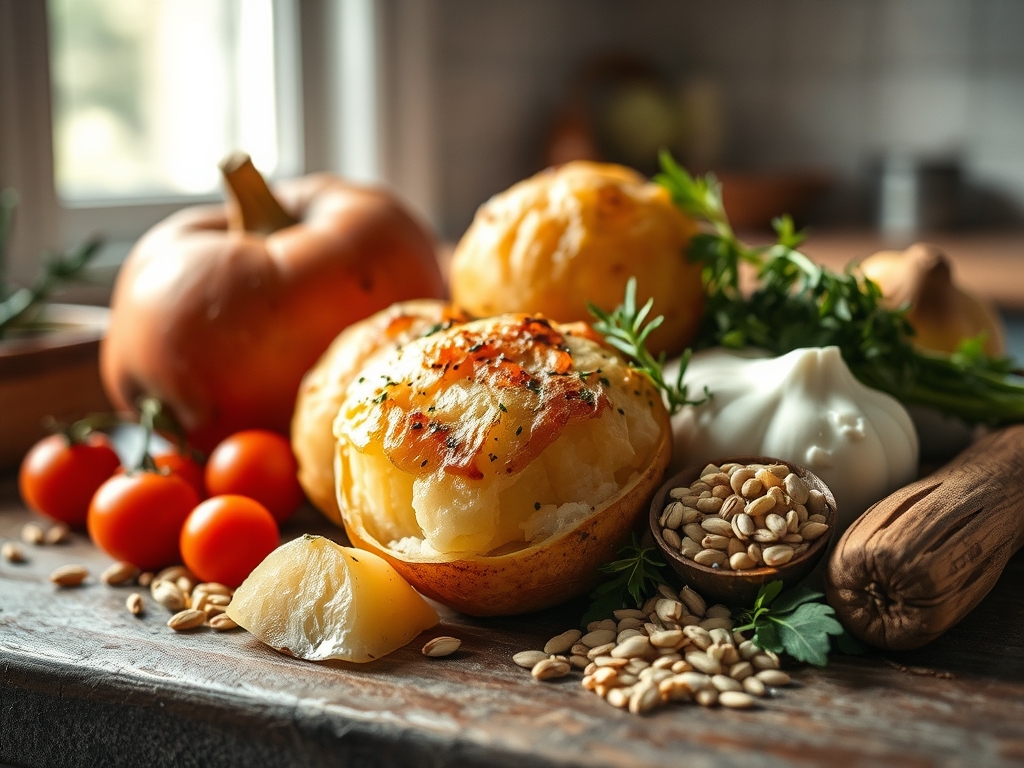
To achieve a professional result, your mise-en-place must be flawless. Start with five pounds of Yukon Gold potatoes. Their medium starch content provides a natural thickener while maintaining structural integrity better than a mealy Russet. You will need a digital scale to ensure your ratios are exact; precision is the difference between a piquant sauce and a greasy mess.
The dairy component requires high-quality, full-fat sour cream. This adds a necessary acidity that cuts through the heavy lipids of the whole milk and sharp cheddar. For the aromatics, gather fresh garlic, shallots, and thyme. Use a microplane to grate your garlic into a fine paste; this ensures the flavor is distributed evenly without the harsh bite of a large chunk.
Smart Substitutions: If you want to elevate the profile, swap the cheddar for Gruyere for a nuttier, more viscous melt. For those avoiding gluten, the natural potato starch usually suffices, but a tablespoon of cornstarch mixed into the cold milk provides an extra insurance policy against breaking.
The Clock: Engineering the Flow
A chef does not just cook; they manage time. Total preparation takes 30 minutes, while the oven time requires a patient 75 to 90 minutes. This is the "Chef's Flow." You spend the first 15 minutes slicing and the next 15 building your bechamel base in a heavy-bottomed skillet.
The long bake time is non-negotiable. It allows the heat to penetrate the dense center of the casserole, ensuring the starch granules fully gelatinize. While the potatoes bake, you have a 60-minute window to prepare your protein or clean your station with a bench scraper, leaving you with nothing but a steaming dish and a clean kitchen at the finish line.
The Masterclass:
1. The Precision Slice
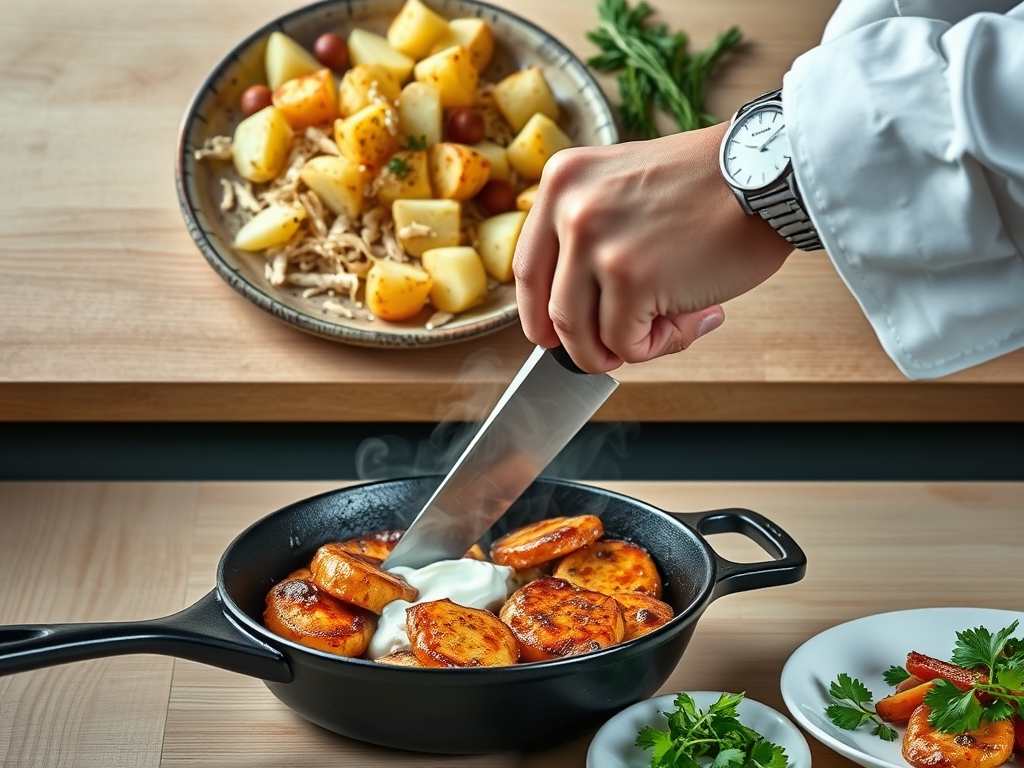
Uniformity is the soul of this dish. Use a mandoline or a very sharp chef's knife to slice your potatoes to exactly one-eighth of an inch. If the slices vary in thickness, the thin ones will turn to mush while the thick ones remain crunchy.
Pro Tip: Do not soak your slices in water. While this prevents enzymatic browning (oxidation), it washes away the surface starch needed to thicken the sauce. If you must slice ahead of time, cover them with a damp cloth to minimize oxygen exposure.
2. Infusing the Aromatics
In a saucier, melt butter and sauté your minced shallots until translucent. Add the garlic paste and thyme, allowing the heat to infuse the fats with essential oils. This creates a flavor base that permeates every layer of the potato.
Pro Tip: Use the "Sweating" technique. Keep the heat low so the vegetables release their moisture without browning. This preserves the white, pristine look of the cream sauce while maximizing the piquant aroma.
3. The Emulsion Build
Whisk your flour into the butter to create a roux, then slowly stream in your milk. Once thickened, remove from heat and fold in the sour cream and half the cheese. The sour cream must be added off the heat to prevent it from curdling.
Pro Tip: Sour cream is an emulsion of fat, water, and protein. Adding it to a boiling liquid causes the proteins to tighten and separate. By folding it in last, you maintain a viscous, silky texture that coats the back of a spoon.
4. The Architectural Layering
Grease your baking dish and begin shingling the potatoes. Do not just dump them in. Layer them like roof tiles, lightly seasoning each layer with salt and white pepper. Pour a portion of the sauce over every two layers to ensure no dry pockets remain.
Pro Tip: This layering creates "capillary action," where the sauce is drawn upward between the slices as the potatoes release their own moisture. This ensures every bite is seasoned from the inside out.
5. The Maillard Transformation
Cover the dish tightly with foil for the first 45 minutes to steam the potatoes. Then, remove the foil, top with the remaining cheese, and bake until the top is a deep, burnished brown. This is the Maillard reaction, where sugars and proteins create hundreds of new flavor compounds.
Pro Tip: If the top is browning too fast, move the rack lower. The goal is to reach an internal temperature of 210 degrees Fahrenheit, which ensures the starch is fully hydrated and soft.
6. The Essential Rest
Once the dish leaves the oven, let it sit for at least 15 minutes. This is the most difficult but important step. The sauce needs time to re-absorb into the potatoes and set as it cools slightly.
Pro Tip: This utilizes thermal carryover. The internal temperature will continue to rise by about five degrees after removal. Resting prevents the sauce from running to the bottom of the plate when you serve.
The Deep Dive:
Macro Nutrition
A standard serving of scalloped potatoes with sour cream is calorie-dense, providing roughly 350 calories, 18g of fat, and 35g of carbohydrates. It is a high-energy side dish best paired with lean proteins like roasted chicken or grilled asparagus to balance the lipid profile.
Dietary Swaps
For a Keto version, swap potatoes for sliced cauliflower or daikon radish; the sour cream sauce remains the same. For a Vegan alternative, use cashew cream and nutritional yeast to replicate the tang and "cheesiness" of the original.
The Fix-It: Common Pitfalls
- Curdled Sauce: This happens if the heat is too high or the dairy is too lean. Fix it by using full-fat products and never letting the sauce reach a hard boil once the sour cream is added.
- Crunchy Potatoes: Usually caused by slicing too thick or under-baking. If this happens, add a splash of warm milk, cover tightly with foil, and return to the oven for 20 minutes.
- Greasy Top: This occurs when the cheese "breaks." To fix, blot excess oil with a paper towel and finish under the broiler with a dusting of breadcrumbs to absorb the remaining lipids.
Meal Prep and Reheating
To achieve "day-one" quality when reheating, avoid the microwave. The uneven waves cause the fat to separate. Instead, place a portion in a small oven-safe dish, add a teaspoon of water or milk, cover with foil, and heat at 325 degrees until the center is hot. This re-hydrates the starch without breaking the emulsion.
The Wrap-Up:
Mastering scalloped potato recipes with sour cream is a rite of passage for any serious home cook. It is a lesson in patience, temperature control, and the beautiful synergy of fat and starch. When you pull that bubbling, golden tray from the oven, you are serving more than just potatoes; you are serving a masterclass in culinary science. Grab your tongs, gather your ingredients, and prepare to be the hero of the dinner table.
The Kitchen Table:
Why did my sour cream sauce curdle?
Sour cream curdles when exposed to extreme heat or high acidity. To prevent this, always fold your sour cream into the sauce off the heat and use full-fat versions, which are more stable than low-fat alternatives.
Can I make these scalloped potatoes ahead of time?
Yes. You can assemble the dish and refrigerate it for up to 24 hours before baking. Just ensure the potatoes are fully submerged in the sauce to prevent oxidation and browning while they sit in the fridge.
What is the best potato for scalloped recipes?
Yukon Golds are the gold standard. They contain the perfect balance of starch and moisture, allowing them to soften beautifully while maintaining their shape. Russets tend to fall apart, while red potatoes can stay too firm.
How do I get a crispy top without burning the cheese?
Bake the dish covered with foil for the first two-thirds of the cooking time. This steams the potatoes. Remove the foil and add the cheese only for the final 20 minutes to achieve a perfect, golden-brown crust.
Why are my scalloped potatoes watery?
This usually happens if the potatoes haven't finished cooking or the sauce didn't have enough starch. Ensure you bake until the potatoes are tender and let the dish rest for 15 minutes to allow the sauce to thicken.